


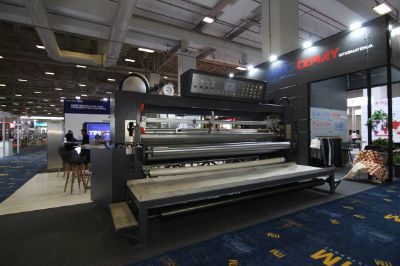

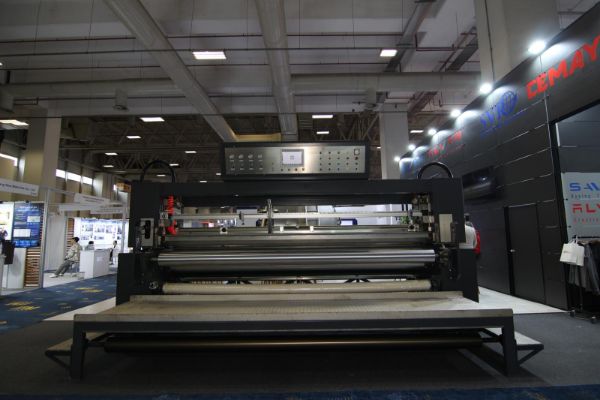
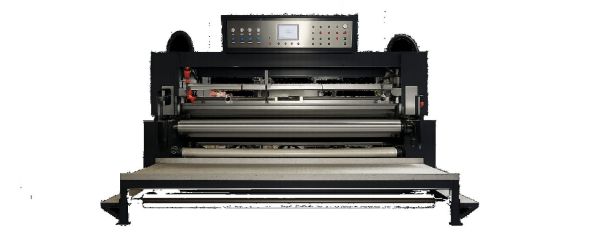
Tarpaulin coating is the controlled application of a PVC layer onto a polyester base fabric, cured in an oven to produce a waterproof surface that resists UV and chemicals. No single machine does that: the result comes from six connected units working as one.
Which units make up a tarpaulin coating line?
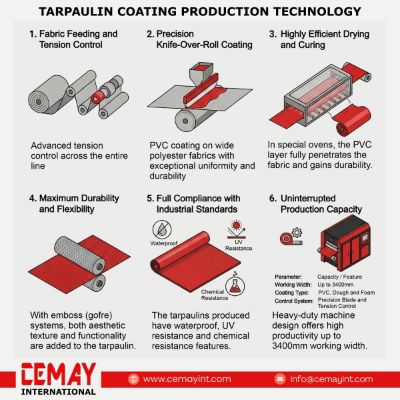
- Fabric feeding and tension control — advanced tension control across the entire line
- Precision knife-over-roll coating — PVC coating on wide polyester fabrics with exceptional uniformity and durability
- Highly efficient drying and curing — in special ovens the PVC layer fully penetrates the fabric and gains durability
- Maximum durability and flexibility — emboss systems add both aesthetic texture and functionality to the tarpaulin
- Full compliance with industrial standards — waterproofing, UV resistance and chemical resistance
- Uninterrupted production capacity — heavy-duty machine design
Why does tension control start at the very first unit?
An even coat weight across the width depends on the tension at which the fabric passes under the blade. If tension drifts along the line, the coat weight drifts with it. That is why tension control is built across the whole line rather than at a single point.
What is knife-over-roll coating?
The coating paste is metered onto fabric running over a rotating roll by a blade held at a fixed gap. The gap between blade and roll sets the amount applied — and that is precisely why the method is chosen for wide polyester fabrics: it distributes the coating across the width with exceptional uniformity.
Why is PVC coating cured in an oven?
Before curing, the applied PVC is only a layer sitting on top of the fabric. In special ovens it fully penetrates the fabric, and the tarpaulin's durability comes from that penetration rather than from surface thickness.
What does embossing achieve?
Emboss systems press a pattern into the surface. The effect runs both ways: the tarpaulin gains an aesthetic texture and functionality at the same time — how it looks and how it behaves in use both change.
What is the line's technical envelope?
| Parameter | Capacity / feature |
|---|---|
| Working width | Up to 3400 mm |
| Coating type | PVC, dough and foam |
| Control system | Precision blade and tension control |
The heavy-duty machine design offers high productivity up to 3400 mm working width.
You can look through our tarpaulin and technical-textile lines on the Tarpaulin application page, and compare coating types in our tarpaulin coating technologies note. To work out how the line should be configured for your own product, reach us through the quote request form.
Frequently Asked Questions
Which coating method is used for tarpaulin?
Precision knife-over-roll coating: the coating paste is metered onto fabric running over a roll by a blade held at a fixed gap. The method is chosen for wide polyester fabrics because it distributes the coating across the width with exceptional uniformity.
What working width can a tarpaulin coating line reach?
CEMAY tarpaulin coating lines reach a working width of up to 3400 mm, and the heavy-duty machine design offers high productivity at that width.
Which durability properties does a coated tarpaulin gain?
The tarpaulins produced have waterproof, UV resistance and chemical resistance features. That durability comes from the PVC layer fully penetrating the fabric during oven curing.