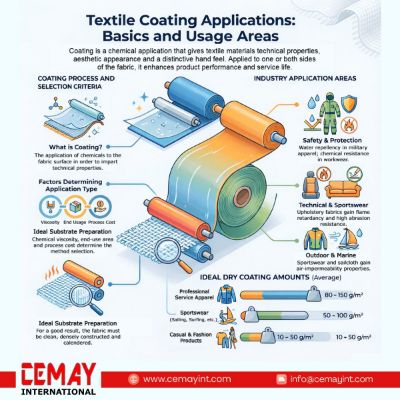

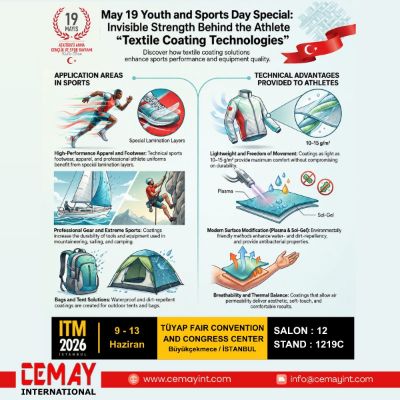
In sports textiles, coating is a thin layer that adds performance without adding weight. Coatings as light as 10–15 g/m² provide maximum comfort without compromising on durability.
Technical Notes
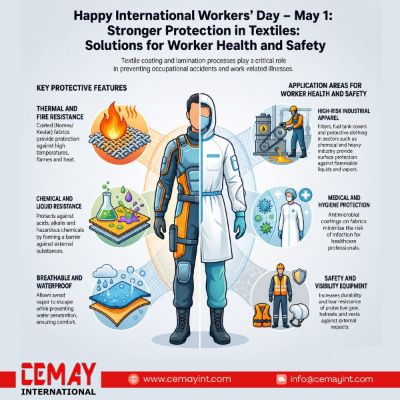
Textile coating and lamination processes play a critical role in preventing occupational accidents and work-related illnesses. What makes a garment protective is often not the fabric itself but the coating applied to it.
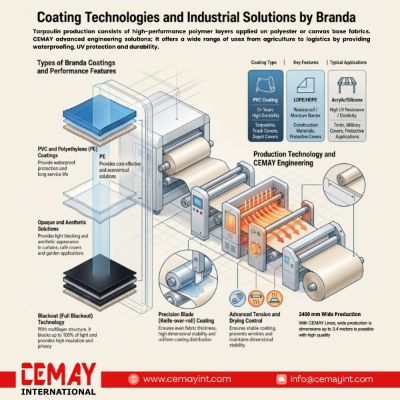
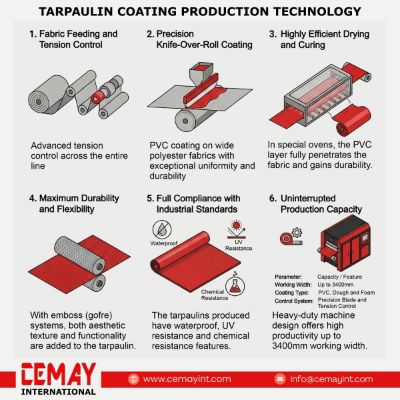
Tarpaulin production consists of high-performance polymer layers applied on polyester or canvas base fabrics. By providing waterproofing, UV protection and durability, they carry tarpaulin from agriculture to logistics.
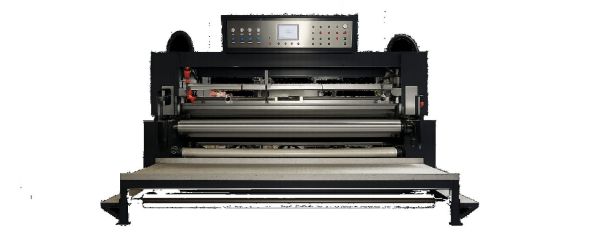
Textile coating is a chemical application that gives textile materials technical properties, an aesthetic appearance and a distinctive hand feel. Applied to one or both sides of the fabric, it enhances product performance and service life.
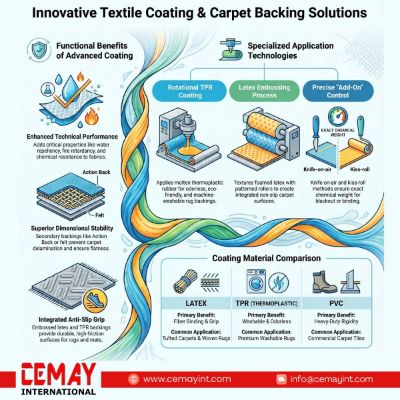
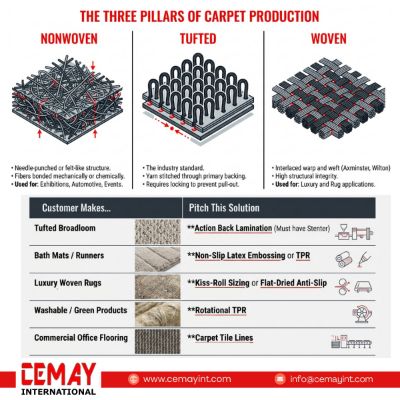
A carpet backing coating does three things: it gives the fabric technical properties, holds the carpet dimensionally stable, and creates a non-slip gripping surface. The material and technique decide which one comes to the front.
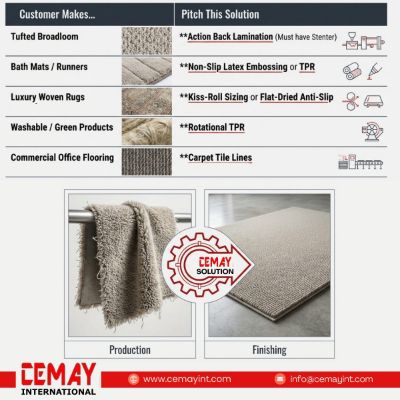
A carpet backing solution is chosen by what the carpet will be sold as, not by how it was produced. Here is which solution fits five product types, and what the line has to provide for each.
Carpet production is not one method but three distinct constructions: nonwoven, tufted and woven. Which one you produce with also decides which backing solution belongs on it.
Tarpaulin coating is the controlled application of a PVC layer onto a polyester base fabric, cured in an oven to produce a waterproof surface resisting UV and chemicals. The result comes from six connected units working as one.